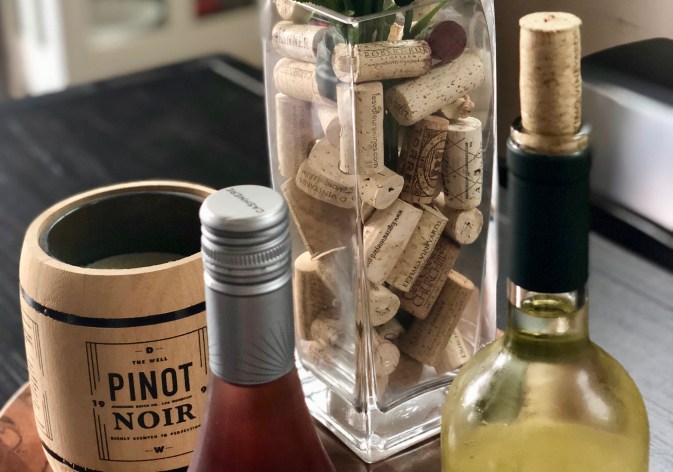
This is a question I’ve heard quite frequently in my wine tasting adventures… which is the best seal for wine bottles? Cork? Synthetic Cork? Screw Cap?
Well, there’s actually not an easy answer for this question because there are reasons for the different enclosures!
Read on for more…
Wine makers are leaning toward screw caps for white wines like Sauvignon Blanc and Pinot Grigio and reds that do not need a lot of aging. Screw caps do not allow oxygen to enter the bottle which ensures that the wine stays crisp and well-preserved. Screw caps also often indicate that a winemaker or an estate was particular in crafting their wine and they didn’t want to introduce the variability of cork.
Real corks are better for bolder wines, like Chardonnay and Cabernet Sauvignon, because these wines benefit from the small amount of oxygen that the cork allows through. This air helps smooth out the tannins so they’re softer, which makes the wine less harsh and more approachable.
Also, I do love the pop of a cork!
However, bottles sealed with cork are susceptible to “cork taint” which is a type of fungus that can cause wine to spoil and affects about 3% of wine. It is only detectable after the bottling and aging process.
Note: Cork taint is why restaurants have you try the wine you order. It’s not to check to see whether or not you like it, it is to make sure it isn’t tainted. I’ll explain how to identify cork taint in a future blog post.
Synthetic corks emerged because of quality control efforts by winemakers to protect against this “cork taint.” These corks are made from plastic designed to look and “pop” like natural cork, but they have some disadvantages which include risk of harmful air entering a bottle after as little as 18 months, and that some can impart a slight chemical flavor to the wine.
Other Pros and Cons from Wine Folly
Cork: Pros
- A Natural Renewable Resource
- Historically Preferred
- Longterm Aging Proven
Cork: Cons
- Expensive (2-3x)
- 1-3% Affected by TCA ‘Cork’ Taint
- Limited Natural Resource
- Variable Quality
- Natural Corks Breathe at Variable Rates
Cork Alternatives: Pros
- More Affordable Option
- No TCA ‘Cork’ Taint
- Longterm aging studies have shown positive results
- Screwcaps are easy to open
Cork Alternatives: Cons
- Some cork alternatives don’t breathe
- Mostly Made From Non-Renewable Resources
- Recyclable but Not Biodegradable
- Variable Manufacturing Quality
- Associated with ‘Cheap’ Wine

So, all in all, a wine’s seal doesn’t necessarily indicate quality! Pop that cork or twist that top, and just drink what you like and enjoy.
Cheers!

“What contemptible scoundrel stole the cork from my lunch?”
— W.C. Fields, You Can’t Cheat an Honest Man (1939)
Sources:
NPR
Vogue
Wine Folly
Wikipedia
 Steph Wines
Thank you Steph,
This article is so helpful. So, I get that great wine can still have a screw top. There is more to consider than just the closures.
I am looking forward to the the discussion on “corked wine”
Great work.
Jim
LikeLike
Thanks, Uncle Jim, so glad you enjoyed! Cheers!
LikeLike
[…] I mentioned in a previous post, “corked” wine affects about 3% of wine, […]
LikeLike
[…] if you’re planning on drinking the bottles soon, or if the bottles have screw caps or synthetic corks, it’s not necessary to lay it down. (Though it doesn’t […]
LikeLike