On Global Champagne Day, we’re going to explore more than just Champagne – we’re going to tackle the difference between some of the most popular sparkling wines in the United States: Champagne vs. Prosecco vs. Cava vs. American Sparkling Wine.
But no matter which you enjoy, they’re all good for celebrating special occasions!
Champagne
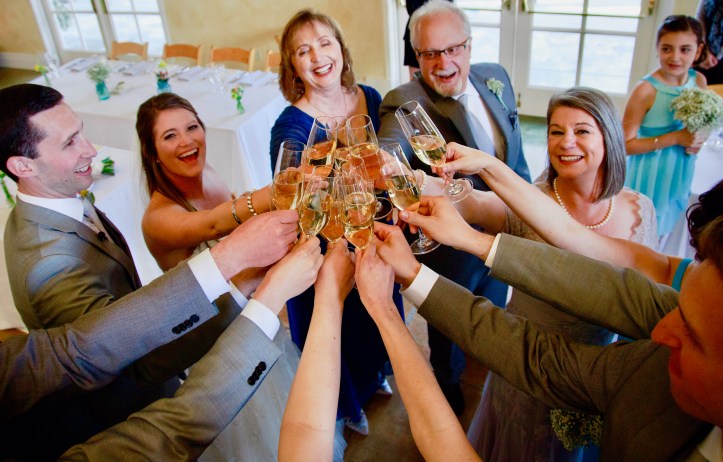
Many use Champagne as a term for all sparkling wine but actually, it is illegal (in some countries) to label any product Champagne unless it both comes from the Champagne region of France and is produced under the rules of the area. Primarily made from Chardonnay, Pinot Noir, and Pinot Meunier grapes, this has long been thought to be the “gold standard” of sparkling wine. It can range from crisp with lots of lemon, peach, green apple, and minerality to rich and full with aromas of toast, almond, toffee, and baked apples. Champagne ferments in the bottle (the Méthode Champenoise or Méthode Traditionnelle), and has very fine and sharp bubbles. There are varying levels of sweetness of Champagne:
- Extra Brut (less than 6 grams of residual sugar per litre)
- Brut (less than 12 grams) *most common style
- Extra Dry (between 12 and 17 grams)
- Sec (between 17 and 32 grams)
- Demi-sec (between 32 and 50 grams)
- Doux (50 grams)
And this is definitely the easiest of the sparkling to “Chambong” —
 (not sponsored by Chambong, unfortunately.)
Prosecco
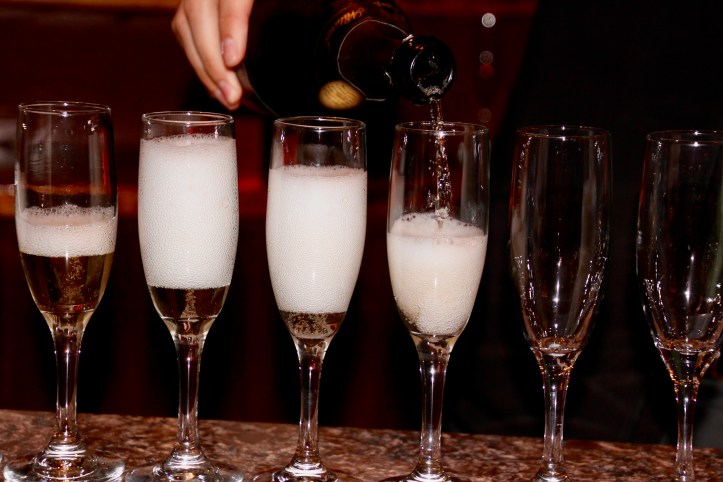
Prosecco is made from the Glera grape in Italy’s Veneto region in the Charmat method (meaning instead of bottle fermentation, this wine is fermented in a large closed pressure tank). This tank fermentation means Prosecco bubbles are lighter than Champagne — frothy with less persistence. The flavors of Prosecco tend to be less complex and more sweet — white flowers, apple, honeysuckle, and pear.
Cava
Cava is from Spain – 95% is produced in the Penedès area in Catalonia. Cava must be fermented in the Méthode Traditionnelle, and many Cavas are aged even longer than Champagne! The main grapes used are the Spanish varietals Xarello, Macabeo, and Parellada, but others can be used.
American Sparkling Wine
Since the US doesn’t have laws about what grapes can be included in what wines, technically just about any grape could be used in American sparkling wines, and it could be made in either the Méthode Traditionnelle or tank fermentation. It’s a free-for-all, really, but Chardonnay and Pinot Noir are the most common grape choices. Some of my personal favorites are Iron Horse, Domaine Chandon, Gloria Ferrer, and, of course, Korbel.

What’s your favorite sparkling wine?
Cheers!

“Too much of anything is bad, but too much champagne is just right.”
– F. Scott Fitzgerald
Sources:
Vine Pair
Wine Folly
 Steph Wines
[…] these rich dishes with Chardonnay, a dry Chenin Blanc, Prosecco, or […]
LikeLike
[…] wines can include sparkling wines, unoaked whites like Gavi or Muscadet, and lighter-bodied reds like unoaked Pinot […]
LikeLike