Meat + Cheese… this pairing is wonderful. When you add wine, it becomes perfection.
But with all the choices, how do you make a good charcuterie board? And how do you pair it with wine?
I’m here to help you with that!
I’ve made my fair share of meat & cheese platters, and I’ve eaten quite a few that others have made, so I like to think I know what I’m talking about (plus, I did some extra research!)
Here are a few tips on how to make a delicious, crowd-pleasing charcuterie board…

Variety
Charcuterie boards need variety!
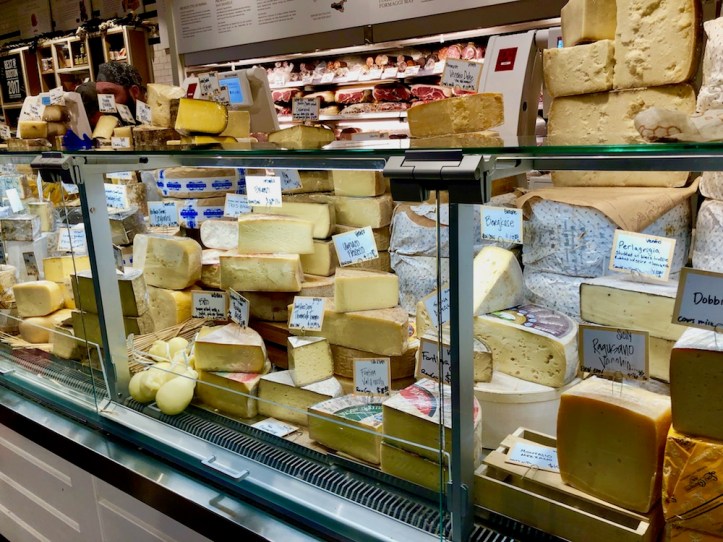
Cheeses: Firm, soft, stinky, cow, goat, sheep… you need a variety of smells (don’t make them all too mild or too pungent), flavors (tangy vs. rich vs. fatty vs. sweet), and textures (hard, creamy, crystallized, etc.)
Serving Tip: Don’t forget to separate the strong-smelling cheeses so they don’t overpower the more delicate ones.
Meats: A variety of meat is just as important! Usually pork products are served on a charcuterie board, but the type and texture is where you can bring the creativity:
- Dry, cured meats like prosciutto or coppa
- Slices of harder meats like salami or chorizo
- Creamy and rich meats like rillettes or pâté

Temperature
Don’t serve cheese straight from the fridge. The cold mutes the flavor. Allowing it to get closer to room temperature helps accentuate the flavors by waking up the flavor molecules.
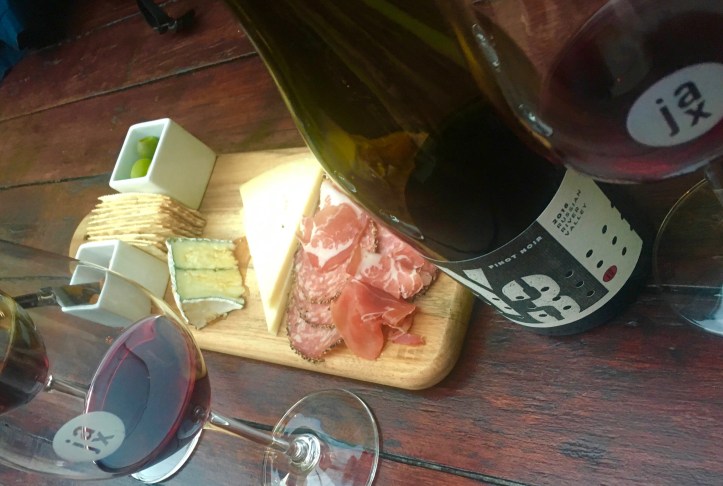
It’s the opposite for the meat! Charcuterie meat oxidizes quickly and loses its appealing, vibrant color and freshness. For prosciutto and salami, slice meats no more than 1-2 hours in advance. Cover with saran wrap and place in refrigerator. Remove the charcuterie platter about 15 minutes before serving.
Don’t Be Stingy
How much is enough? According to Real Simple, for a party in which cheese is the main event, plan on buying 3 pounds for 8 people, 6 pounds for 16, or 9 pounds for 24. If cheese is one of many items being served, plan on buying 3 to 4 ounces per person.
Serving Tip: Set out a separate knife for each cheese. It lessens the mingling of flavors between cheeses, and also the different cheeses may require different knives. Soft cheese spreads with a butter knife but firm cheese might require a sharper paring knife; and aged cheese can sometimes require a cheese plane.
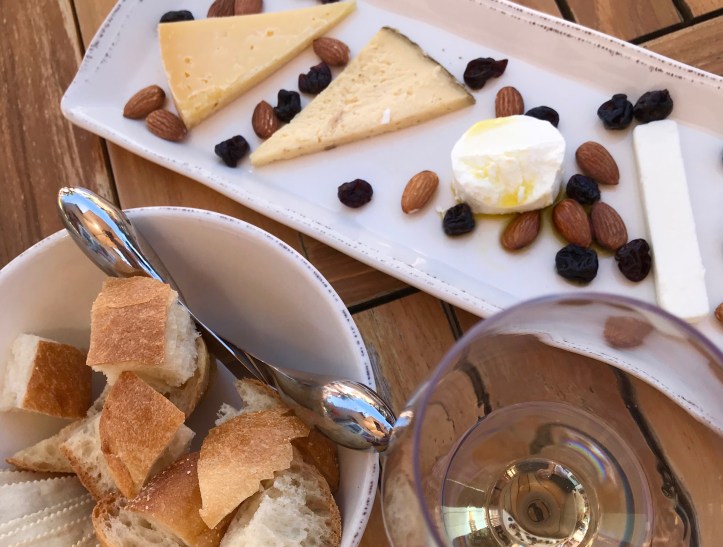
According to Winery chef Todd Knoll, purchase around 2-3 ounces per person per meat for an appetizer portion, or 5-6 ounces per person for a cocktail reception.
The Extras
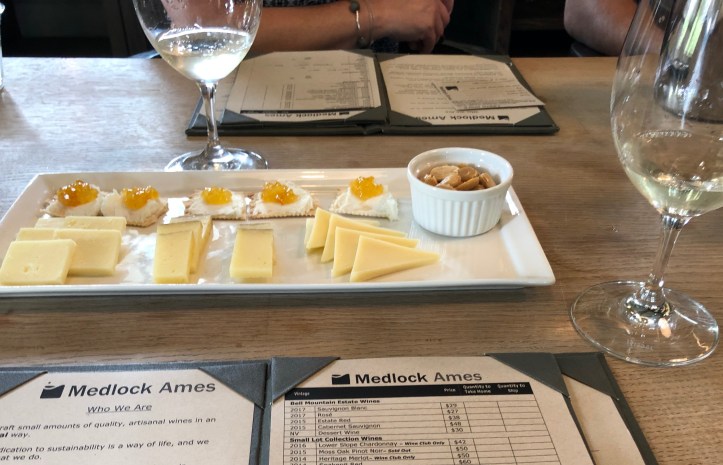
We all know the meat and cheese are the stars of charcuterie platters, but you have to have good accompaniments on the plate to truly make it complete! Honey, jam, mustard, nuts, Extra Virgin Olive Oil, dried fruit, cornichons (tiny pickles!) and other pickled veggies… take your pick! These sides pair well with meats and cheeses and adds a variety of texture and flavors to your board.
And don’t forget the bread! Sliced baguette (toasted or not), bread sticks, crackers in different shapes and sizes — try to vary the taste and texture, if you can. You need a good vessel to get the deliciousness from the platter to your mouth, so don’t let it be an afterthought.
Serving Tip: Label the cheeses to help avoid confusion and to keep from having to say the same spiel over and over (and over…) I love these ceramic cheese markers from Crate and Barrel, or these chalkboard cheese markers from Williams Sonoma.

The Wine
One of the most important parts, at least in my eyes, is the wine pairing.
Because most charcuterie boards are gluttonous and delicious and filled with fat and salt, you want to avoid anything too complex — I don’t recommend drinking a heavy Cabernet Sauvignon or an oaked, buttery Chardonnay with your charcuterie, at risk of overpowering the pairing.
Wine expert Joshua Wesson notes, “Whenever you’re having foods like charcuterie that have salt, fat, savory spices and textures that can run the gamut from silky and moist to really, really dry and intense, you’ve got to look for beverages that are refreshing, that can cleanse the palate.”
What that means to me is acidity, acidity, acidity! You should choose…
- a Champagne or sparkling wine because of the high acidity, lower alcohol, and their affinity for pairing well with salty dishes.
- a chilled light-bodied red (nothing too tannic) to balance acidity and cut through the fat, like a Barbera or an earthy cool climate Pinot Noir.
- an un-oaked white wine like Sauvignon Blanc, Albariño, or Chenin Blanc. Or a sweeter white, like Riesling.

The most important thing is to experiment with your charcuterie board, and try out combinations of meats, cheeses, and wines. You never know when you could stumble on a pairing that is just heavenly!
Cheers!

“You have to be a romantic to invest yourself, your money, and your time in cheese.”
– Anthony Bourdain
Sources:
Food and Wine
Real Simple
Vine Pair
Wine Country Table
Splendid Table
 Steph Wines
Thank you for sharing this. It is very well done and helpful.
I am inspired.
Thank you
LikeLiked by 1 person